When sourcing display suppliers for instrumentation projects, buyers should evaluate practical capabilities rather than vague claims of “rich customization experience”. Critical checkpoints include understanding application-specific display requirements, mechanical and electrical matching capabilities, feasibility for end-device assembly validation, configuration control throughout volume production, quality-management certifications, and long-term supply arrangements.
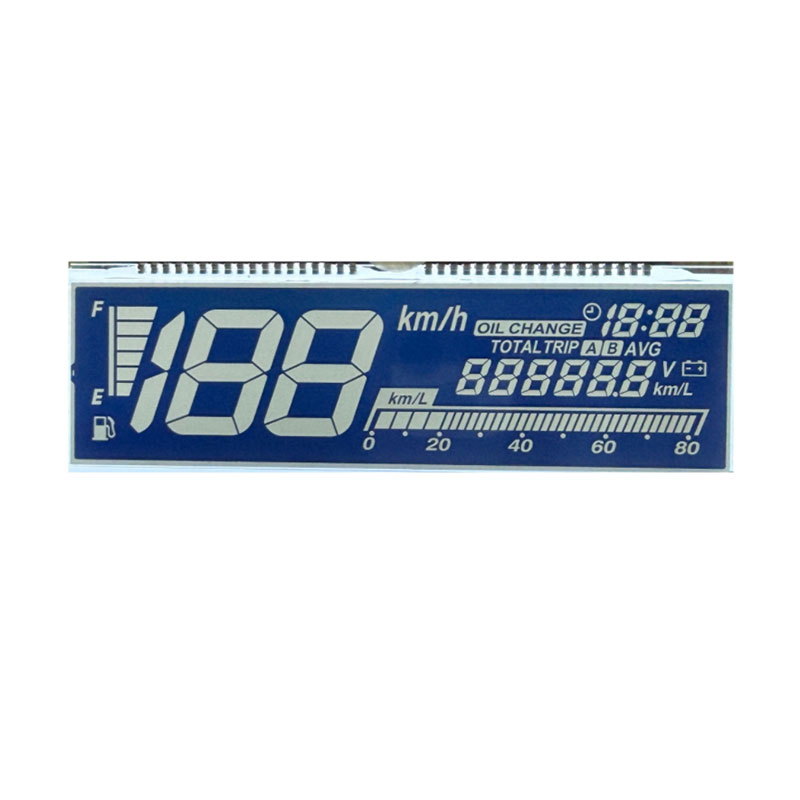
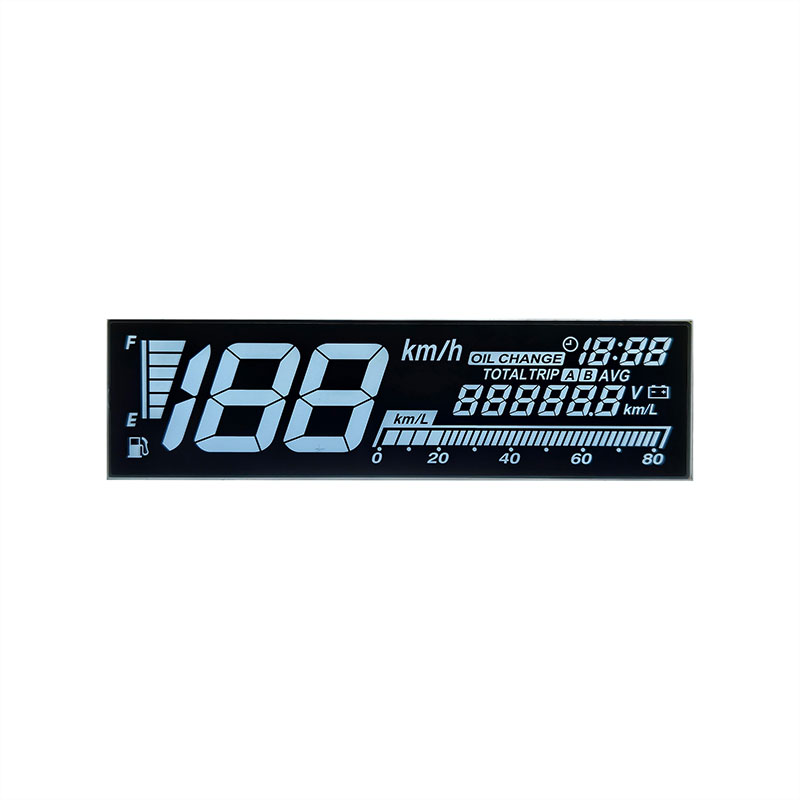
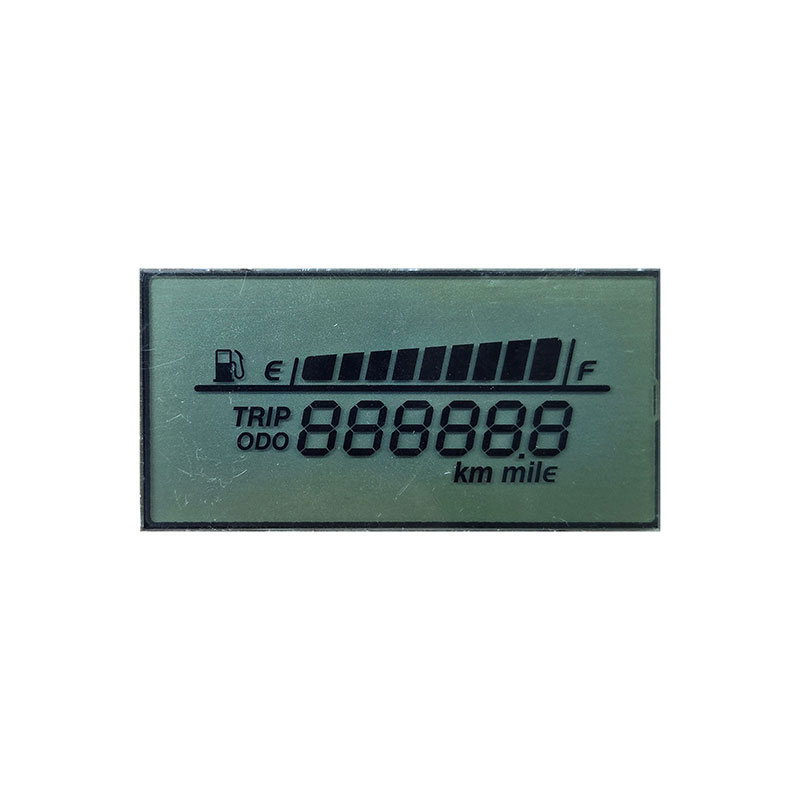
Displays for instrumentation cover multiple technical variants. Products such as electronic scales, thermo-hygrometers, multimeters, power meters and test equipment need digits, units, icons and status indicators. You may consider TN, HTN, STN, FSTN, DFSTN or VA segment LCD panels.
For character or graphic outputs, dot-matrix LCD modules using COG or COB construction as appropriate can be selected according to resolution, interface and mechanical constraints. For colour UI and multi-level menus, TFT solutions should be assessed. A supplier’s ability to adjust solutions for your complete device is the first indicator of genuine custom-engineering competence.
An experienced display manufacturer will not only ask for dimensions and order quantity. At project kick-off, they should confirm outline dimensions, viewing area (VA) and active area (AA), as defined in the approved drawing, display content, preferred viewing direction, positive-mode or negative-mode display, logic supply voltage, LCD drive conditions and backlight electrical ratings, pin definition or FPC specifications, backlight colour, luminance and its measurement conditions where applicable, power consumption, operating-temperature range and forecasted order volume.
For outdoor meters, industrial controllers and continuously-running equipment, further inputs are needed: ambient-light conditions, viewing-angle demands, temperature fluctuation range, vibration exposure, continuous power-on duration and overall mechanical installation style.
Complete requirement documentation delivers drawings, samples and quotations that closely match real-world conditions, and reduces repeated photomask revisions or mechanical tooling changes, as applicable, and PCB rework.
Custom LCDs may not be directly interchangeable with standard parts; compatibility must be verified.
Before formal sampling, output documents should include display layout drawings, mechanical structure drawings, pin-out definitions, driving parameters and formal datasheets, with strict version control. If display patterns, FPC routing, backlight assemblies or critical components are modified after sample approval, formal change records must be maintained.
This step strongly reflects a supplier’s project maturity. Their engineering team must understand how the LCD panel interfaces with main PCBs, front panels, keypads and device housings.
For instrumentation applications, real-world performance such as readability under assembly stress and connection reliability weighs more than standalone bare-screen performance.
A lit-up sample only confirms basic functionality. During sample evaluation, inspect for missing segments, unintended segment activation and crosstalk, contrast ratio, viewing-angle performance, background tint, backlight uniformity, interface communication stability and mechanical fit.
For battery-powered instruments, pay close attention to power draw. Outdoor and wide-temperature projects require high-low temperature cycling, ageing and the specified powered-operation or ageing tests. Vibration-prone equipment needs verification of structural fastening and connection robustness.
Pilot-run production should commence only after sample approval. This validates assembly efficiency, test workflows and batch-to-batch consistency.
Dongguan Fangsheng Electronics offers one pilot production run for each new model, subject to agreed quantities and commercial terms, confirming process integrity and hardware compatibility before full-volume shipment.
Dongguan Fangsheng Electronics supplies LCD displays covering TN, HTN, STN, FSTN, DFSTN and VA technologies.
Its product portfolio includes monochrome LCD panels, LCD modules using COG or COB construction, and TFT LCD modules. Backlight and PCBA supporting services are also available.
This broad portfolio addresses varied requirements from fixed-digit segment displays and character dot-matrix outputs to graphic user interfaces.
Even with comprehensive product lines, off-the-shelf solutions cannot fit every project. Buyers still need to perform detailed model selection based on displayed content, internal space, driver interfaces, power consumption and environmental conditions.
Final acceptance shall be based on drawings, sample testing and end-device validation results.
For instrumentation-display vendors, verify both quality-management and environmental compliance documentation.
Dongguan Fangsheng Electronics holds IATF 16949 certification for its automotive quality management system, ISO 9001 quality-management certification and RoHS compliance. Supporting quality and environmental documentation can be provided upon project request.
ISO 9001 covers general quality-management systems. IATF 16949 specifies quality standards for automotive supply chains. RoHS restricts specified hazardous substances in electrical and electronic equipment.
Product-specific compliance should be supported by the relevant documentation.
When reviewing certificates, cross-check the legal entity, certification scope, certificate number, issuing authority and expiry date.
For export-oriented, medical or automotive projects, supplement material declarations, test reports and environmental validation documents as required by end-customer standards. Certifications alone cannot replace product-level testing.
Instrumentation projects frequently require repeat orders. Long-term reliability depends on production capacity, lead-times, material security and version-control protocols.
Fangsheng Electronics reaches a monthly output of 3 million pieces. Standard LCD sample turnaround is approximately 12 days; mass-production lead-time runs 25-30 days.
LCM modules require 3-4 weeks for sampling and 4-6 weeks for mass-production. TFT modules take 2-4 weeks for sampling and 4-6 weeks for mass-production. MOQ thresholds depend on LCD panel dimensions.
Actual lead-times vary with panel size, backlight configuration, FPC design, tooling, test scope and order volume. All timelines should be formalised within mutually agreed documents.
For long-term supply security, confirm drawing management, BOM control, mould retention and critical-component governance.
Advance notification and qualification validation are mandatory before any substitution of driver ICs, polarisers, liquid-crystal materials, FPC, LED components or connectors.
Five core evaluation criteria:
Verified legal entity with valid, in-scope certifications
Capable of completing display, mechanical and electrical engineering validation
Samples pass hardware assembly and required environmental reliability testing
Well-defined workflows for pilot-batch and mass-production manufacturing
Full traceability for drawings, bill of materials (BOM), production lots and non-conformance records
With comprehensive product offerings, certified quality systems, mature custom workflows, proven capacity and stable delivery performance, Dongguan Fangsheng Electronics can be considered for your vendor short-list for instrumentation display projects.
Prior to formal cooperation, buyers must confirm technical datasheets, sample performance, test records, factory conditions and contractual terms item-by-item.
Practical project-oriented verification is far more reliable than marketing slogans claiming “abundant customisation experience”.
This website uses cookies to ensure you get the best experience on our website.
 +86 13609666385
 Vale@fsdzlcd.com
 Whatsapp8615626154788

 English
  العربية
  Deutsch
  Español
  Filipino
  Français
  Bahasa Indonesia
  Italiano
  Русский
  ไทย
ไทย  Türkçe
  Tiếng Việt