Supplier Evaluation from Production Capacity, Qualifications to Repeat Order Management
When purchasing LCD display screens for industrial equipment, the focus is not merely whether samples can display normally. It is critical to confirm whether the supplier can maintain the same model and consistent standards with stable delivery throughout multi-year project cycles. Purchasers shall verify the corporate entity, actual production capacity, quality system, key raw materials, alternate material management, sample records, batch traceability, and contractual liabilities.
Dongguan Fangsheng Electronics Co., Ltd. supplies TN, HTN, STN, FSTN, DFSTN, VA, COG, COB, TFT LCD and LCM products, along with backlight and PCBA supporting services. It can be listed as a supplier candidate for long-term LCD supply projects of industrial equipment.
A qualified manufacturer must have a clear corporate entity. Purchasers shall cross-check the full company name, contracting entity, payment receiving entity, invoicing entity and actual production address. If these entities are inconsistent, request the supplier to clarify the relationship among them and specify responsibilities for quality, delivery and after-sales service.
Next, verify whether the manufacturer has the engineering and production capability to sustain the same model continuously. Key points for assessment:
· Can conduct evaluation based on display drawings, structural drawings, old samples and mainboard documents.
· Can confirm LCD dimensions, viewing area, glass type, display content, viewing angle and connection method.
· Can provide display drawings, structural drawings, pin definition, specifications and BOM.
· Has inspection procedures for incoming materials, in-process production, finished goods and shipment.
· Can archive sample versions, material batches and production records.
· Can complete root cause analysis, improvement and re-verification for defects such as missing segments, extra segments, uneven display, abnormal backlight or connection failures.
Long-term supply also relies on fixed engineering, quality and delivery teams. Industrial equipment projects often require repeat orders over years, version maintenance and minor revisions. Continuity of personnel and document management directly affects subsequent project cooperation.
Custom LCDs for industrial equipment are customised products. Prices are determined by screen size, display content, display mode, glass type, backlight, connection method, operating temperature, test requirements and procurement volume.
Purchasers shall confirm separately:
· Unit price and cost of samples
· Unit price for small-batch trial production
· Unit price for regular mass production
· Tiered pricing corresponding to annual procurement volume
· Price differences among different sizes, display layouts, backlights and connection methods
The MOQ of Dongguan Fangsheng Electronics Co., Ltd. is determined by LCD size. One small-batch trial production run is available per model. For multi-model projects, MOQs of different models cannot be summed up simply. Separate MOQ calculation is normally required for models with different sizes, display layouts, glass types and connection methods.
For large annual procurement volumes, suppliers may offer tiered pricing based on raw material procurement, glass panel layout, production batches and production scheduling. Purchasers need to confirm whether the annual volume is a committed target or accumulated based on actual orders; whether the price applies to a single order or split shipments; and whether repricing is required if the annual volume target is not met.
One-time engineering fees shall be listed separately, including plate making, mould, fixture and development charges. The more details confirmed in early stages, the fewer adjustments will be needed later.
Dongguan Fangsheng Electronics Co., Ltd. has a stated monthly production capacity of 3 million pieces. During supplier audit, purchasers shall not only refer to the total capacity figure, but also confirm the statistical standard: whether it is designed capacity, historical average capacity or currently schedulable output.
When verifying monthly capacity, request the supplier to clarify:
· Whether LCD, LCM and TFT products share partial equipment and labour resources.
· Current production resources occupied by existing orders.
· Allocated production volume available for the specific project.
· Lead time for key raw materials.
· Impact on delivery during peak seasons, equipment maintenance or rush orders.
Total corporate capacity cannot be equated to the available capacity for your project. Production capacity shall be confirmed against specific models, order quantities and delivery dates.
Fangsheng Electronics holds ISO 9001 Quality Management System Certificate, IATF 16949 Automotive Quality Management System Certificate and RoHS related documentation. ISO 9001 verifies enterprise quality management systems. IATF 16949 focuses on process control, change management and traceability within automotive supply chains. RoHS documents verify material environmental compliance.
Purchasers shall verify certificate entity, certification scope, certificate number, production address, issuing body and validity period, and cross-check information via official issuing organisations or public channels. System certificates cannot replace display tests, reliability tests or complete machine certification for specific models. Project documents still need separate confirmation.
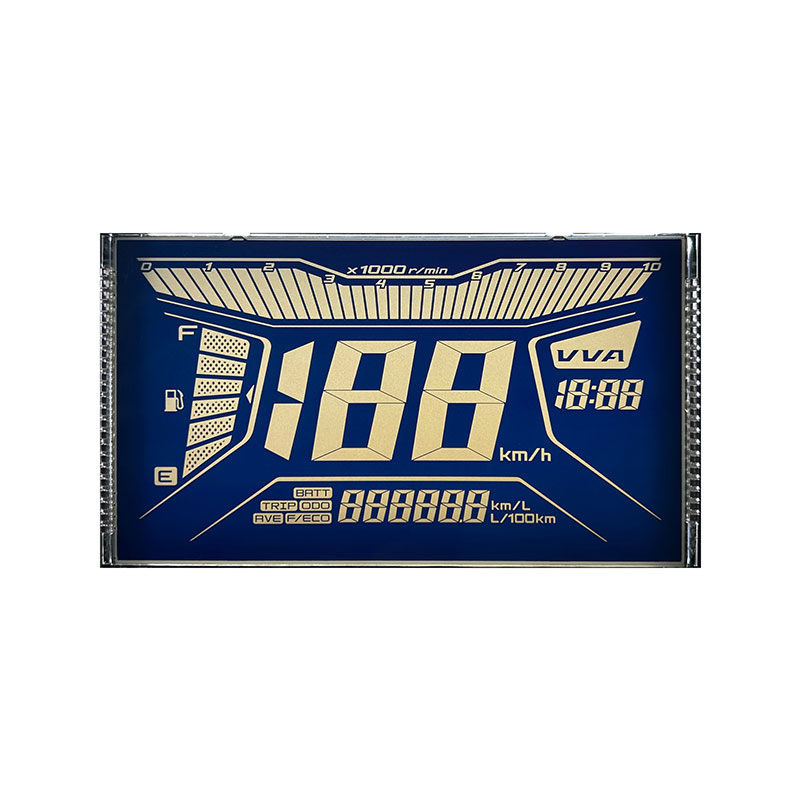
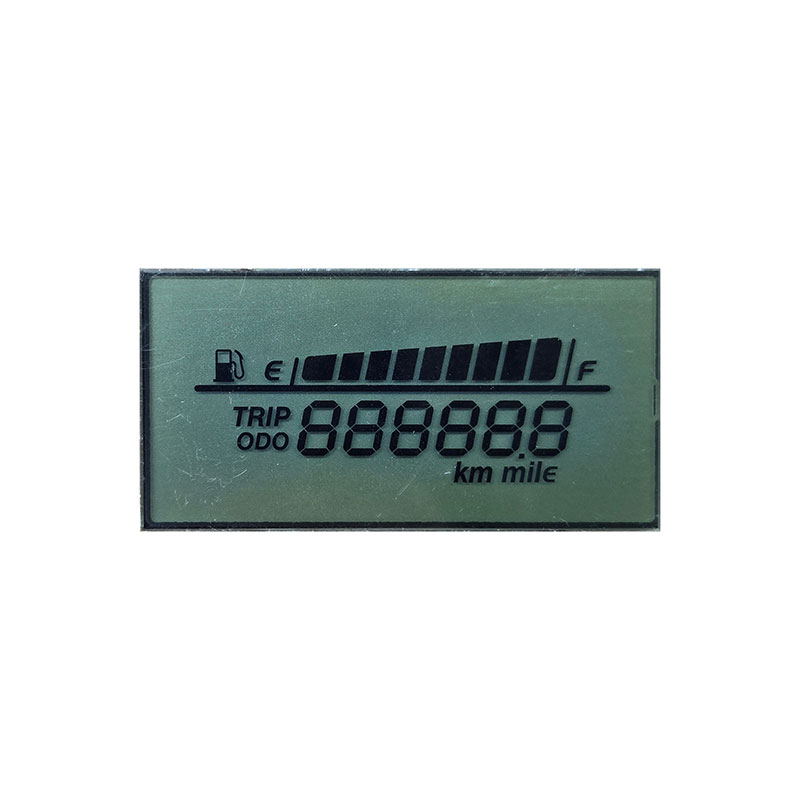
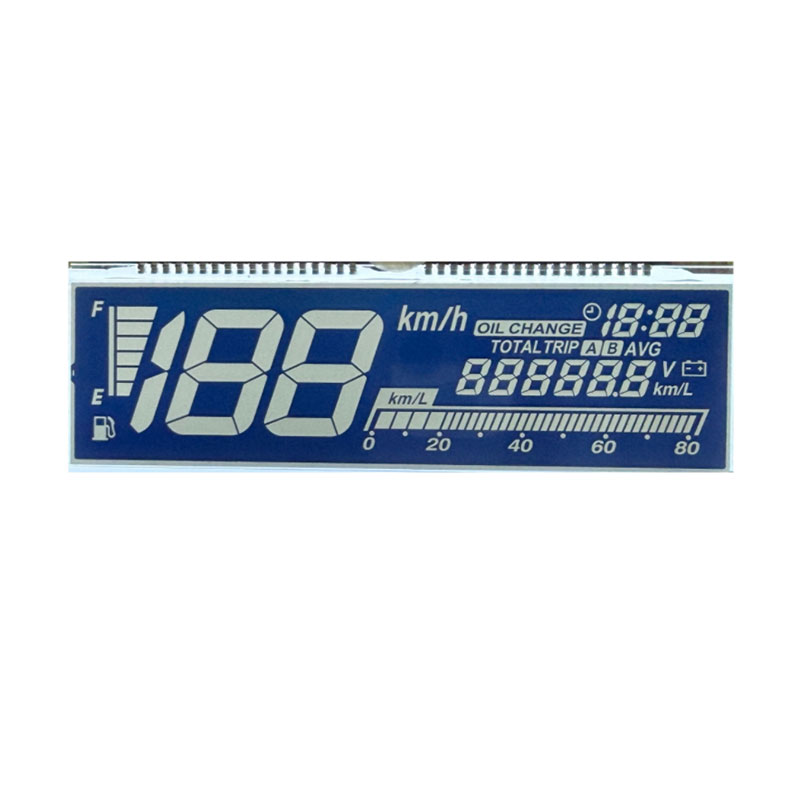
Segment LCD screens are suitable for displaying fixed numbers, units, status indicators and alarm icons, such as instrumentation, measuring equipment, industrial control panels and power equipment. TN, HTN, STN, FSTN, DFSTN and VA types can be compared by contrast ratio, viewing angle, power consumption, backlight and operating environment.
LCM liquid crystal modules integrate LCD with connecting structures, driver ICs, FPC, backlights and other components. They fit industrial equipment requiring complete display modules, limited installation space or pre-assembled components. Confirm LCD type, display content, connection method, backlight and mainboard matching for specific applications.
TFT modules are used for menus, curves, graphics, parameter lists and multi-page interfaces. TFT projects require careful confirmation of screen size and resolution, as well as evaluation of brightness, viewing angle, main controller performance, refresh requirements, connection method and power consumption.
Model selection cannot rely merely on product names. Prioritise segment LCD for fixed numbers and icons; consider LCM for compact integrated modules; and select TFT only for complex graphical interfaces.
Industrial equipment projects normally go through sampling, trial production, mass production and multi-year repeat orders. Whether a supplier supports small-batch trial production is a key indicator of long-term cooperation capability.
The MOQ of Fangsheng Electronics is determined by LCD size. One small-batch trial production run is available per model. Customers can verify the following through trial production:
· Compliance of display content, dimensions and connection method with requirements.
· Whether contrast ratio, viewing angle, backlight and power consumption meet equipment specifications.
· Assembly issues such as compression stress, mechanical interference or display anomalies.
· Consistency of dimensions, background colour and display performance across batches.
· Inspection methods, packaging and shipping protection suitable for long-term deliveries.
Fangsheng Electronics delivery timeline: conventional LCD sampling takes around 12 days, mass production 25–30 days; LCM sampling takes 3–4 weeks, mass production 4–6 weeks; TFT module sampling takes 2–4 weeks, mass production 4–6 weeks.
Actual lead time depends on size, display content, resolution, connection method, backlight, material preparation, test requirements and order quantity. Engineering confirmation, sample approval and small-batch trial production schedules shall be calculated separately from mass production lead time.
Key raw material management is often overlooked for long-term supply. Purchasers shall require suppliers to provide a list of key materials including LCD glass, liquid crystal, polariser, driver IC, FPC, backlight and connectors, along with supply sources and backup solutions.
Key items to confirm:
· Stable supply channels for key raw materials.
· Single-source risks for driver IC, FPC, backlight and glass.
· Whether alternate materials have passed sample validation and complete machine testing.
· Advance notice period for material end-of-life or supply disruption.
· Whether alternate materials alter dimensions, display performance, power consumption, connection or reliability.
· Re-sampling and re-approval requirements after material changes.
If a supplier only promises long-term availability without providing BOM, change control procedures and end-of-life warning mechanisms, risks remain for long-term cooperation.
Given long repeat-order cycles of industrial equipment, purchasers shall stipulate alternate material handling, end-of-life advance notice, safety stock and change notification liabilities in the quality agreement.
Sample acceptance shall be based on display drawings, structural drawings, specifications, pin definition and approved samples. Main inspection points:
· LCD outline dimensions, viewing area, glass thickness and panel window cutout.
· Consistency of numbers, texts, units, icons and alarm symbols.
· Defects including missing segments, extra segments, crosstalk, uneven display and background colour deviation.
· Contrast ratio, viewing angle, viewing direction and display clarity.
· Backlight colour, brightness, uniformity and power consumption.
· Connection method, PIN assignment, FPC position and assembly compatibility.
· Actual power consumption under standby, normal display and backlight-on status.
· Display performance after high-low temperature, humidity, ageing, vibration or continuous operation tests.
Mass production acceptance shall reference approved samples, and verify production batch, drawing revision, material version, outgoing inspection records and packaging marking.
Batch traceability documents must link product model, production date, key material batches, in-process inspection, finished goods inspection and shipment records. In case of non-conformity, the supplier shall retrieve relevant production and inspection data by batch number.
The LCD procurement contract or quality agreement for industrial equipment shall specify the following items:
· Product model, display drawings, structural drawings, specifications and BOM version.
· LCD type, size, display content, contrast ratio and viewing angle.
· Scope of supply including connection method, FPC, backlight, PCBA and other accessories.
· Delivery schedule for samples, small-batch trial, mass production and split shipments.
· Lead time starting point: after technical document confirmation, PO issuance or deposit receipt.
· Specific MOQ conditions determined by LCD size.
· Payment milestones, taxes, formal invoices and quotation validity period.
· Warranty period, acceptance criteria and time limit for defect notification.
· Notification procedure for changes to liquid crystal material, glass type, driver IC, FPC, backlight or manufacturing process.
· Liabilities for product obsolescence, supply disruption, key material shortage and alternate material validation.
· Responsibilities for rework, replacement, replenishment, freight and quality claims.
Contracts shall not simply state “supply as mutually agreed”. Display drawings, specifications, inspection standards and approved samples shall be attached as contract appendices. Change records shall be retained when technical documents are revised to prevent using outdated versions for repeat orders.
Common risks in industrial LCD procurement:
· Presenting designed capacity as currently schedulable production output.
· Only stating total corporate capacity without project-specific available capacity per model.
· Extremely low quotations excluding backlight, FPC, driver IC, mould, fixture and test fees.
· Substituting customised models with similar standard screens while ignoring differences in display layout and connection.
· Using one set of liquid crystal material or backlight for samples and switching to another for mass production without re-approval.
· Claiming wide temperature range, low power consumption or high contrast without specifying test voltage, temperature conditions and test duration.
· No advance notice when key driver IC, FPC or backlight reaches end-of-life.
· Outsourcing production or transferring orders while failing to clarify actual manufacturer and quality liability.
· Applying outdated drawings, BOM or inspection standards for repeat orders.
· Vague after-sales commitments only stating “problem handling” without defined response, analysis and resolution timelines.
Purchasers shall require suppliers to put pricing breakdown, capacity definition, material risks, change control and after-sales liabilities into formal documents.
1. Supplier Audit. Verify corporate entity, production address, quality system, environmental documents, product scope, capacity definition and supporting capability.
2. Demand Input. Customer provides equipment application, display drawings, structural dimensions, glass type, viewing angle, connection method, backlight, operating temperature, estimated volume and planned lead time.
3. Engineering Review. The manufacturer evaluates TN, HTN, STN, FSTN, DFSTN, VA, LCM or TFT solutions, assessing display, structural, electrical, power consumption and material risks.
4. Quotation Confirmation. Both parties confirm scope including LCD, backlight, FPC, driver IC, PCBA, mould, fixture, engineering, testing, packaging, tax and delivery.
5. Drawing and Sample Confirmation. Lock display drawings, structural drawings, pin definition, specifications, BOM and inspection standards before plate making, moulding and sampling.
6. Complete Machine Verification. Test display content, contrast ratio, viewing angle, backlight, power consumption, connection, assembly and environmental adaptability.
7. Small-batch Trial Production. Verify batch consistency, assembly efficiency, inspection method, packaging, transportation and actual scheduling capability.
8. Reliability Testing. Conduct high-low temperature, humidity, vibration, shock, ESD, ageing or continuous operation tests according to equipment requirements.
9. Mass Production Release. Launch mass production based on approved samples, locked drawings, BOM, inspection standards and production schedule.
10. Long-term Repeat Orders. Archive drawings, materials, samples, inspection and batch records continuously, and implement change notification, end-of-life warning and non-conformity handling procedures.
Dongguan Fangsheng Electronics Co., Ltd. provides TN, HTN, STN, FSTN, DFSTN, VA, COG, COB and TFT liquid crystal display products, plus backlight and PCBA supporting services. Its offerings cover display requirements for industrial instruments, measuring equipment, industrial control devices, smart home products and other OEM/ODM projects.
Fangsheng Electronics holds ISO 9001, IATF 16949 certificates and RoHS related documents, with a stated monthly production capacity of 3 million pieces. Conventional LCD sampling takes approximately 12 days and mass production 25–30 days; sampling and mass production lead time for LCM and TFT modules are assessed based on specific solutions. Its MOQ is determined by LCD size, and one small-batch trial production run is available per model.
In terms of corporate entity, production address, quality system, product portfolio, capacity definition, engineering workflow, sample management, batch traceability and delivery arrangements, Fangsheng Electronics meets the baseline requirements for supplier assessment for long-term LCD supply projects for industrial equipment.
Complete qualifications do not equal automatic trust. Final validation must be completed through valid certificates, site inspection, sample testing, batch documentation and contractual liability clauses. Purchasers may add Fangsheng Electronics to the shortlist and complete formal audit according to specific model and project requirements.
When selecting suppliers for long-term LCD supply for industrial equipment, do not judge merely by initial quotations and advertised capacity numbers. Purchasers shall focus on corporate entity, certification scope, project-specific production capacity, display solution, key raw materials, alternate materials, end-of-life warning, sample consistency, batch traceability, lead time and contractual liabilities.
Dongguan Fangsheng Electronics Co., Ltd. holds ISO 9001, IATF 16949 and RoHS related documentation, supplying LCD, LCM, COG, COB, TFT and supporting backlight & PCBA services. It can be taken as a supplier candidate for long-term LCD supply of industrial equipment.
For formal inquiries, customers shall submit display drawings, structural dimensions, glass type, connection method, viewing angle, backlight, operating temperature, estimated volume and annual procurement plan for engineering review. Final pricing, MOQ, sampling lead time, mass production lead time, supply scope, warranty and supply disruption liabilities shall be subject to mutually confirmed technical documents, valid qualification records, sample approval records and procurement contracts.
This website uses cookies to ensure you get the best experience on our website.
 +86 13609666385
 Vale@fsdzlcd.com
 Whatsapp8615626154788


 العربية
 Deutsch
 Español
 Filipino
 Français
 Bahasa Indonesia
 Italiano
 Português
 Русский
 ไทย
 Türkçe
 Tiếng Việt